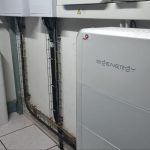
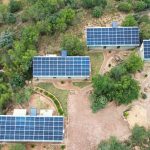
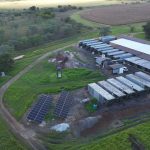
Type of Installation: Commercial Grid-Tie
Location: Constantiapark, Tshwane, Gauteng
Can you really add a monetary value to the worth of excellent education?
A school should be a place of opportunity and development – and shouldn’t be impacted by unplanned power outages and load shedding. At the same time, the cost of running a school and their operational costs, can become exorbitant.
How would any school save on costs without compromising on the quality of education and opportunity? The easiest and most logical place to save is on electricity. The reasoning…
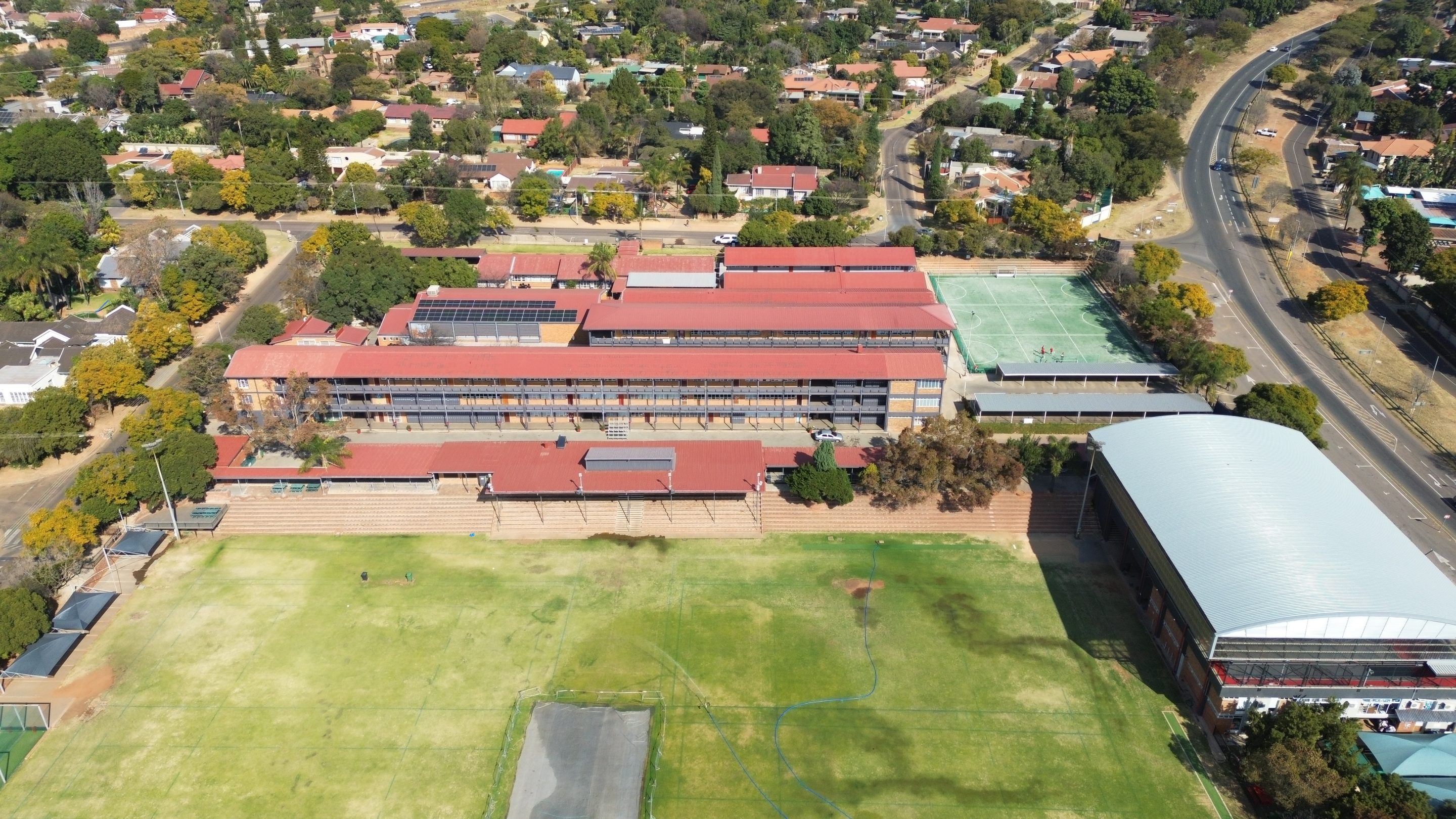
The biggest consumption is during sunshine hours and the sporting events at night. Therefore, generating even just a portion of a school’s electricity directly reduces its operational costs.
The Red Energy team assisted Constantiapark Primary in finding the balance between installation cost and monthly savings.
Previously, the school relied on a generator, but the high running costs, along with the noise and exhaust fumes, made it an unsustainable long-term solution.
The end goal for the school is to reduce their electricity bill and ultimately be less dependent on the grid, and less reliant on the generator.
While consulting with the Constantiapark team, Red Energy recommended a phased approach to accommodate their financial needs and budget.
In the first phase of the project, we installed a 25kVA grid-tie inverter and 30kWp of solar panels.
In this phase, the generator is kept as a backup for night-time events, but during the day, the solar panels handle the load. This leads to further savings for Constantiapark while lowering its carbon footprint.
Constantiapark Primary School can now generate 30% of its electricity needs through solar power, without compromising the quality of their supply.
This means they effectively and sustainably reduced their daily operational cost without adding any strain on education. Now, with minimal disruptions, the children receive excellent education under stable conditions.
Constantiapark Primary is another prime example of how solar power reduced operational cost and increased the quality of life and education.