By Jakes Joubert, CEO of Red Energy
In recent years, the poultry farming industry in South Africa has faced a multitude of challenges, from fluctuating feed costs to disease outbreaks. However, one of the most pressing issues threatening the sustainability and profitability of poultry farms today is the rising cost and instability of electricity supply.
With Eskom’s recent announcement of a staggering 44% tariff increase, the need for poultry farmers to reconsider their electricity provider has never been more urgent.
The power struggle
Electricity is a critical component in poultry farming operations. From maintaining optimal temperatures in chicken houses to powering essential equipment like incubators, feeders, and water systems, a reliable and affordable electricity supply is vital. However, the recent and continuous hikes in electricity tariffs by Eskom are creating financial strain for many farmers.
A planned 44% increase in electricity costs is not just a number; it’s a significant hike that can severely impact a farm’s bottom line. For small to medium-sized poultry farms, this could mean the difference between breaking even and operating at a loss. The increased costs eat into profit margins, making it harder for farmers to reinvest in their operations, upgrade equipment, or even maintain the same level of production. For larger operations, while the scale might absorb some of the shocks, the cumulative costs can still run into hundreds of thousands of rands, affecting long-term sustainability and growth.
Instability of power supply
Beyond the issue of cost, the reliability of electricity supply is another critical concern. Poultry farming requires a stable environment, especially regarding temperature control. Fluctuations in temperature can lead to stress among the birds and chickens, reducing their growth rate and egg production. In extreme cases, it can even lead to increased mortality rates.
Unfortunately, South Africa’s current electricity supply is anything but stable.
Unplanned power outages and load shedding have become the norm, adding another layer of stress for farmers. The unpredictable nature of these outages means that farmers often have to rely on backup generators, which are not only costly to run, especially raising fuel costs, but also contribute to wear and tear on equipment, further increasing operational costs.
There is a cheaper alternative
Given these challenges, it’s clear that poultry farmers need to explore more reliable and cost-effective electricity solutions. This is where Red Energy comes in. Specialising in commercial solar power solutions, Red Energy offers a viable alternative to Eskom’s increasingly expensive and unreliable service.
Why Consider Solar Power?
1. Cost Savings:
One of the most compelling reasons to switch to solar power is the potential for significant cost savings. Solar energy systems require an initial investment, but the long-term savings are substantial. With Red Energy’s Power Purchase Agreement (PPA), farmers can get started with no upfront costs. Instead, they pay for the electricity they use at rates lower than Eskom’s, allowing them to immediately save on their electricity bills.
2. Stability and Reliability:
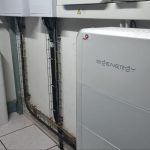
Solar power offers a more stable electricity supply, free from the disruptions commonly associated with grid power. This stability is crucial for maintaining the consistent environmental conditions needed in poultry farming. With a well-designed solar power system, farmers can also incorporate battery storage solutions, ensuring a constant power supply even during outages.
3. Sustainability:
More than ever, consumers are concerned about the environmental impact of the products they buy. By switching to solar power, poultry farms can reduce their carbon footprint, making their operations more sustainable. This not only contributes positively to the environment but can also serve as a marketing point, attracting environmentally-conscious consumers.
4. Minimal Maintenance:
Solar power systems require relatively little maintenance compared to traditional power generators. Red Energy’s PPA includes maintenance and insurance, meaning farmers don’t have to worry about unexpected costs or system upkeep. This allows them to focus more on their core business—raising poultry—without being distracted by energy concerns.
5. Future-Proofing Your Farm:
With the global trend moving towards renewable energy, investing in solar power is a forward-thinking decision that can future-proof your farm. As the technology continues to advance and costs decrease, the benefits of solar power will only become more pronounced.
Not Enough Space for Solar Panels?
If your poultry farm lacks sufficient space for solar panels, Red Energy has a solution. We can provide cheaper electricity through the Eskom network, ensuring that you still benefit from lower rates and a more stable power supply. This flexible approach allows us to tailor our energy solutions to meet the specific needs of your farm, ensuring still benefit from lower rates and a more stable power supply.
Conclusion
Poultry farming is a challenging industry, requiring careful management of numerous variables to ensure success. However, with rising electricity costs and an unreliable power supply, the stakes have never been higher. The recent 44% tariff increase by Eskom underscores the urgency for farmers to reconsider their electricity provider.
If you’re a poultry farmer looking to secure your farm’s energy future, it’s time to make the switch.
Contact Red Energy today for a free consultation and discover how much you can save while enjoying the benefits of clean, reliable solar power.